Bullfighting is ancestral and the island maintains several active cattle ranches. The activity is divided into square bullfights and the typical rope bullfights, in which the bull runs through the streets of the town held by a long rope held by a group of men, known as the shepherds. The bull season runs from the 1st of May to the 15th of October.
Rope bullfighting in Terceira Azores
October 2026
Day 01 – Figueiras do Paim – Praia da Vitória – 17h00
Day 03 – Canada Capitão Mor – São Mateus – Angra do Heroísmo – 17h00
Day 04 – Canada Capitão Mor – São Mateus – Angra do Heroísmo – 17h00
Day 05 – Vila das Lajes – Praia da Vitória – 17h00
Day 05 – Terreiro do Paço – Serra da Ribeirinha – Angra do Heroísmo – 17h00
Day 05 – Canada Capitão Mor – São Mateus – Angra do Heroísmo – 17h00
Day 06 – Vila das Lajes – Praia da Vitória – 17h00
Day 07 – Vila das Lajes – Praia da Vitória – 17h00
Day 08 – Vila das Lajes – Praia da Vitória – 17h00
Day 09 – Vila das Lajes – Praia da Vitória – 17h00
Day 10 – Vila das Lajes – Praia da Vitória – 17h00
Day 10 – Recanto – Porto Martins – Praia da Vitória – 17h00
Day 10 – Terreiro – São Mateus – Angra do Heroísmo – 17h00
Day 10 – São João de Deus – Angra do Heroísmo – 17h00
Day 10 – Terreiro – Serreta – Angra do Heroísmo – 17h00
Day 11 – Rua Dr. Batista Lima – São Bartolomeu – Angra do Heroísmo – 17h00
Day 11 – Largo da Igreja – Agualva – Praia da Vitória – 17h00
Day 13 – Santo Amaro – Ribeirinha – Angra do Heroísmo – 17h00
Day 14 – Largo da Fonte – Vila de São Sebastião – Angra do Heroísmo – 17h00
Day 15 – Estrada Regional – Vila do Porto Judeu – Angra do Heroísmo – 17h00
Day 15 – Terra Chã – Angra do Heroísmo – 17h00
Bullfight finder
Discover the captivating bullfighting tradition of Terceira Island with Bullfight Finder, the App for bullfighting on Terceira Island. Stay connected, informed and captivated by this unique cultural experience.
Download Bullfight Finder for free now!
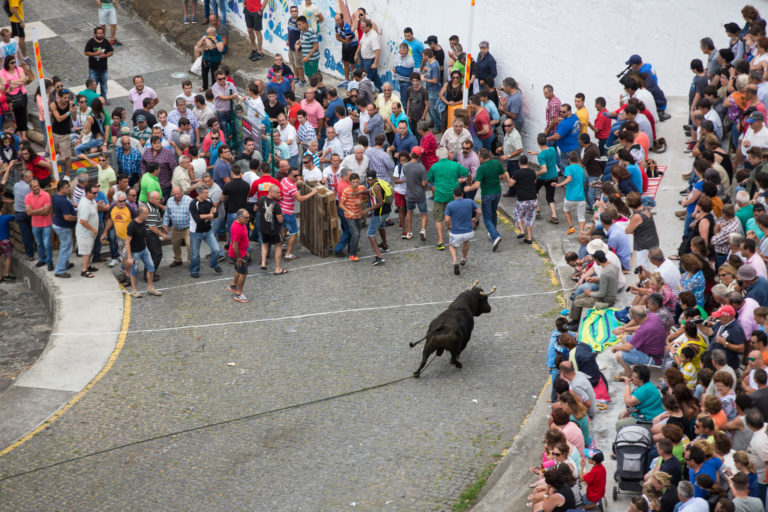
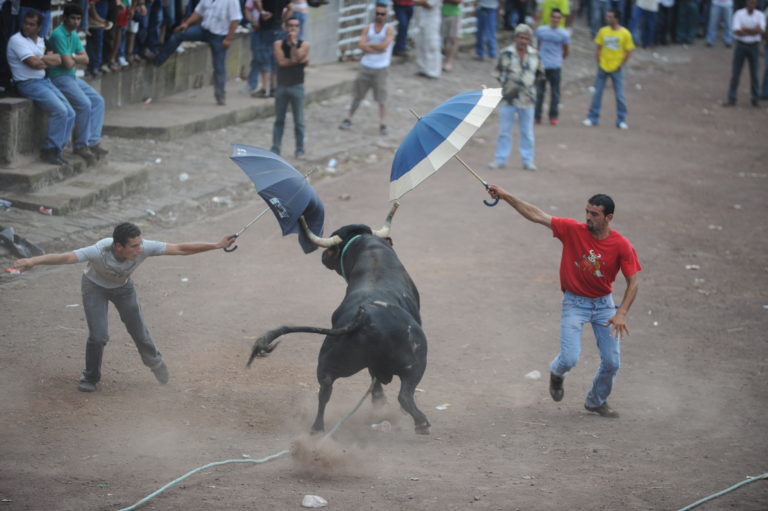
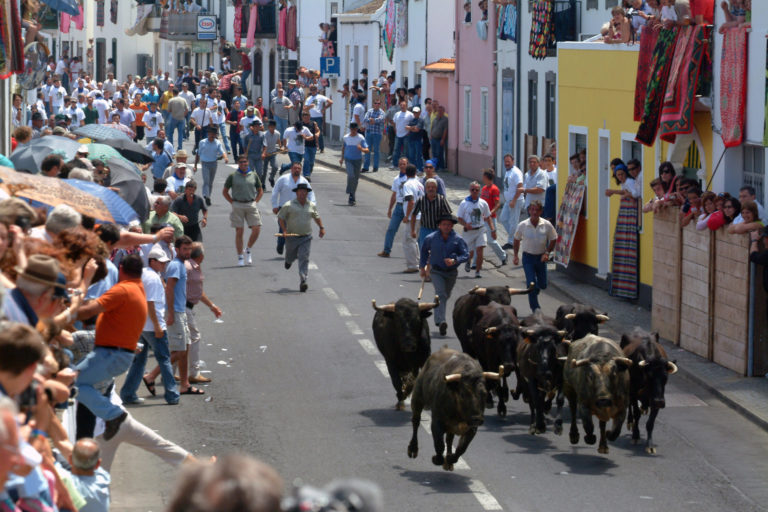
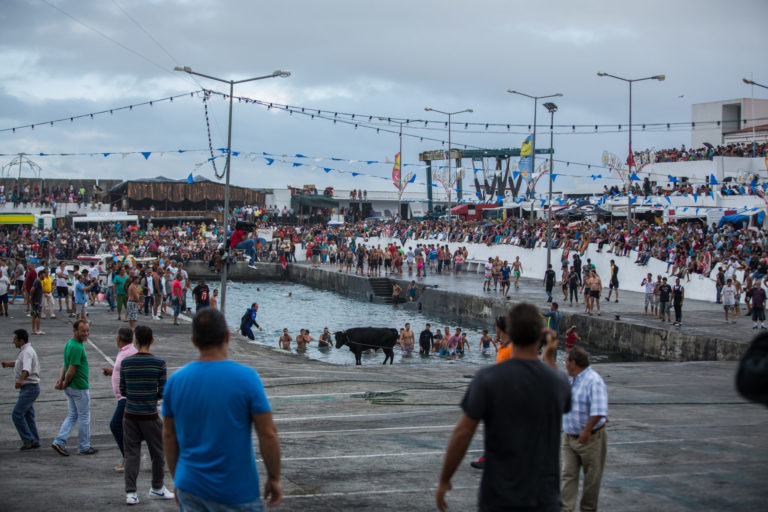
Rope bullfighting is considered the greatest manifestation of popular character in the Azores, being a show specific to this region, mainly from the Central Group, with particular expression on Terceira Island. Its central element is Toiro Bravo, which is idolized by our people and by all who visit us.
Rope bullfights are held on the islands of São Jorge, Graciosa, Pico and Terceira, the latter being the island with the highest number of shows per year, with more than 200 festivities.
Such is the importance of wild cattle in the popular imagination of Terceira that the victory at the Battle of Salga, on July 25, 1581, is attributed to the bulls, when they expelled the invading Castilian troops. Portuguese to resist Filipino rule. For this reason, they are also represented (bulls) in the coat of arms of the Autonomous Region of the Azores.
The first reference to rope bullfighting appears only in 1622, on the occasion of the celebrations, in Angra, for the canonization of São Francisco Xavier and Santo Inácio de Loyola. In these celebrations, rope bulls were “run” through the streets of the city. However, it is believed that these popular manifestations already existed much earlier.
Despite the origin of rope bullfighting being lost in the memory of the times, this spectacle of popular nature is currently duly legislated with a set of rules that guarantee its proper functioning, the health and well-being of the animal, as well as the safety of the population.
